Monday, June 8, 2015

Monday, May 18, 2015
Thursday, April 30, 2015
GoPro 360view
Wednesday, April 29, 2015
Shakespearean Poetry
The sonnet we read in class is Shakespearean because of its tone and structure. The poem consists of several sets of four lines with ab-ab rhyming schemes, then shifting to an aa rhyming scheme in the last couplet. The other characteristic that makes it Shakespearean is the shift in tone in the last couplet from satirical and insulting to geniuine and almost sweet. The first lines of the poem make fun of love poems by realistically describing someone in a seemingly insulting way. However the shift in the last couplet makes it real. By describing a persons imperfections and then saying that the author still loves the woman shows a new type of "real" love poem, over a fake mushy poem saying how unrealistically beautiful someone is.
Thursday, April 23, 2015
Monday, April 20, 2015
If Macbeth didn't kill
If Macbeth didn't take things into his own hands and go out and kill for power the entire play would be different. First off, if Macbeth just let things be and didn't gain power at other peoples expense but rather through bettering himself, the play wouldn't be nearly as interesting. The entire play shows how he slowly gets more and more paranoid killing people left and right, without the paranoia, there would be a very different mood to the play. There would also be a very different tone because Shakespeare would be talking about a different subject matter and thus the theme would also be different. Most of these things (tone, mood...) would just be the reciprical of what they are in the original play. For instance the tone would be working hard is the right way to do things rather than ambition could lead to your demise.
Saturday, April 18, 2015
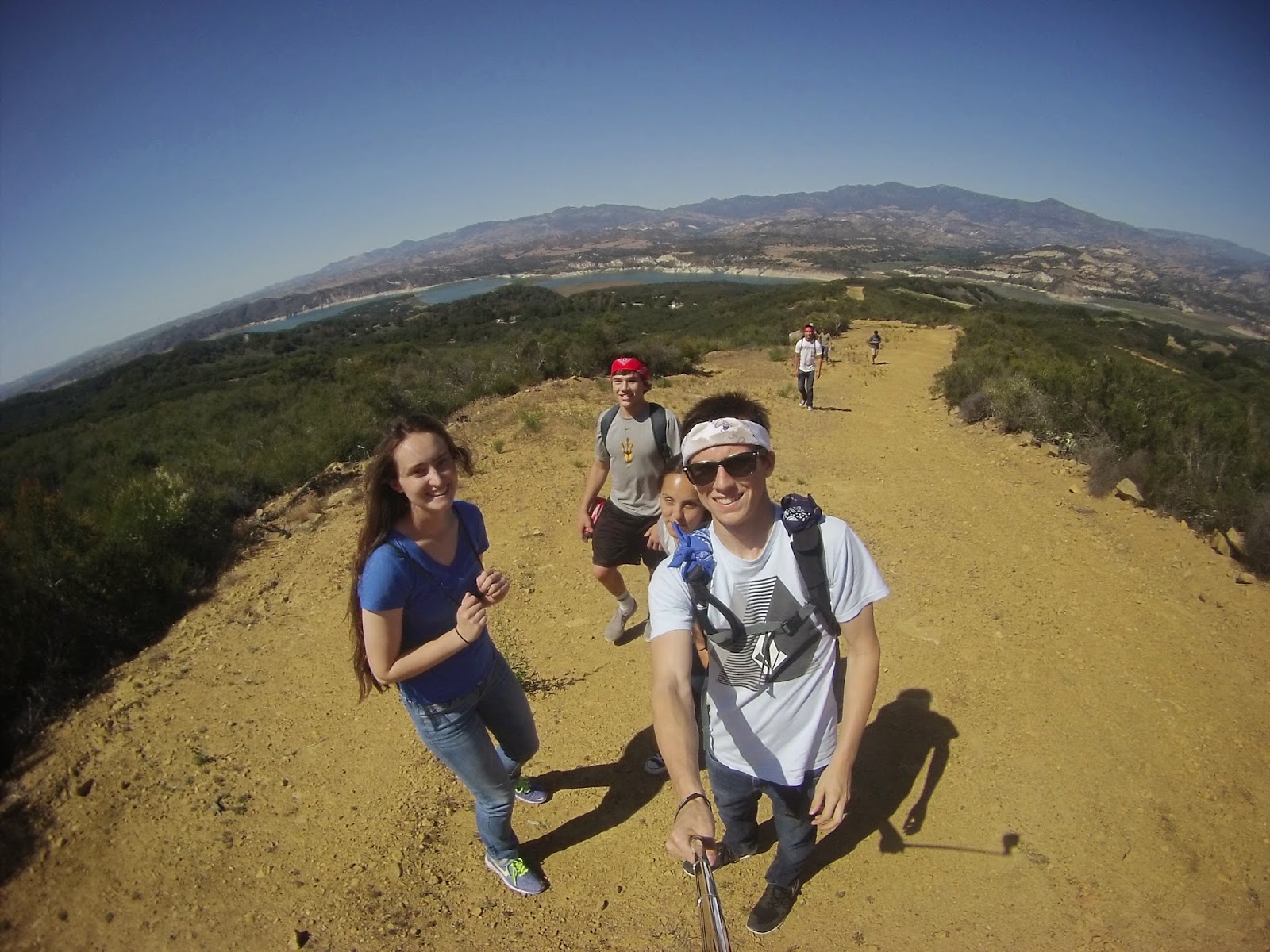
Outdoor School
I know this post is really long but it's important to me so please read. I promise it gets more interesting the further in you go.
I just
missed an entire week of school. I have several hours’ worth of makeup work to
do. I have to take several tests on Monday. I am going to fail those tests. Do
I regret missing school? Absolutely not.
This past
week I decided to go to The Outdoor School with 103 sixth graders from Dunlap
Elementary School. I went as a cabin leader with several other students from
Righetti, to help the campers have the best experience possible. All the cabin
leaders had to come up with fun “nature names” like “Willow” or in my case “Shark
Bait.” My role specifically was to be in charge of a group of 13 boys who were
in my cabin, “Pismo.” Every night they slept in my cabin and every day I was
responsible for making sure they got to activities on time and that they were
all quiet and asleep by 9:30. I was also assigned to a dining table where
myself and a group of six campers sat to eat every meal together. I made sure
they ate enough good food and only took what they could eat so they had minimal
waste. I was also placed into a hiking group. The “Fleas” and I went on all the
curriculum hikes together listening to the naturalist tell us about specific
things about the environment as we hiked: plants, animals, geology, Chumash
culture, and a Night hike. On these hikes it was my responsibility to keep the
kids quiet while the naturalist talked, encourage kids to get involved asking
questions and participating, and lastly making sure no one fell behind on the
hikes.
It may seem
like I had a lot of responsibilities when it came to being a Cabin Leader, but
it was probably the most fun I’ve had all year. I got to hang out with 11 of my
good friends, and develop interesting relationships with kids who didn’t know
my real name. I had the opportunity to be a role model for kids who were at an
age that they really need one. I remember back when I was in sixth grade and
was at outdoor school, I really looked up to the cabin leaders. They were much
more relatable than a 30 year old naturalist or a 50 year old teacher. The
cabin leaders were in High School. They were the “cool big kids” whom every sixth
grader wanted to be. Last week, I got to be that “cool big kid.” All the kids
needed the Cabin Leaders for one reason or another. The trouble makers needed
someone positive who would give them a reason to be good. The ones who were too
afraid to put themselves out there needed someone who would back them up when
they did. The quiet ones needed someone who would hear them speak. The bullied
needed someone to look out for them. The outsiders needed someone who would
include them. I had a different experience with every kid. Every kid looked up
to me in a different way. And not to sound full of myself, but it felt good. To
go from a world and community where you have no voice, where you are the bottom
of the food chain where its every man for himself, to a place where you not
only have power, but you’re looked up to and admired, where people respect your
leadership and authority, is incredible. I’ve always enjoyed activities where I get to
lead, from refereeing to school activities, but nothing compares being a cabin
leader.
During
outdoor school, I woke up at 6:30 every morning, a whole hour before I wake up
for school, and I felt energized. The days were exhausting, and I still woke up
early every day ready to start the day. I didn’t feel groggy, I never yawned, I
was alert. I still don’t have a definite answer why. Taking care of preteens is
supposed to be exhausting and it was but I still don’t feel tired. I have a few
theories. The first is the energy of the kids. The kids woke up excited to see
what the day would hold, and maybe there excitement wore off on me. Second is
the fact that I went to bed at a reasonable hour. Lights out in the cabins at
9:30, and even though I didn’t go to sleep until 10:30, I still was asleep
earlier than at school. My last theory is my individual experience. I love the
outdoors, I love the adventure of the unknown, of seeing knew things, and waking
up in a new, beautiful place excited me. Though all of these reasons seem valid
the exhaustion hasn’t caught up to me. There is no doubt that this week should
have been tiring and no matter what the reason I awoke with energy is, I just
am not that tired. Don’t get me wrong I’m not upset I’m not tired, I’m just
confused. Maybe the fresh air is the cure to tired.
As a Cabin
Leader I had to help the kids learn, but I have to say, I learned a lot myself.
My masterpiece is all about getting outdoors. I absolutely love hiking and
getting away from it all, getting dirty hiking through the woods, camping, just
full on nature. Outdoor school has reinforced that. Because of outdoor school I
have learned the value of opening your mind to the world around you. That
sometimes you need to shut up and listen, that hiking at night without a light
can be beautiful. That a week without internet and TV and cars and long showers
and clean clothes and a working toilet, and all the other modern conveniences
really isn’t that bad. While there is value in “coming prepared,” there are
things you really don’t need. I only wore two different pairs of pants and a
pair of shorts the whole week and switched off between three shirts. I wore the
same jacket and same sweatshirt all week. I could have packed in a small
backpack. I didn’t need my phone or its charger. There are a lot of things that
I would have normally brought but didn’t and I’m glad, because I didn’t need
them. Would I have been more comfortable with more stuff? Yeah, probably, but I
would have ruined the experience. We all get so worried with being comfortable
and bringing all our modern things with us that we forget that the whole reason
we go to the outdoors is to get away from all those things, because otherwise,
we really aren’t going to the outdoors. I’m not saying show up with shorts and
a T-shirt and that’s it, but really think about what you’re bringing places and
if you really need it. Enjoy nature as it comes, don’t modify (and therefore
ruin) the experience.
The reason
I post this to my blog is because it relates to masterpieces. The point of our
masterpieces is to be a leader inspiring people with our work and our passion,
asking questions and insisting on answers. My Outdoor School experience was
just that. I lead and inspired sixth graders, I found my love for nature and
have been inspired to continue to explore it through hiking and backpacking. I
had fun experiences with my fellow cabin leaders making memories, another thing
I love very much, inspiring me to take people with my backpacking for more
memories. As far as I’m concerned I’ve done my masterpiece. I’ve learned a lot,
I’ve become inspired, and I did something I love. I know it’s my masterpiece
because I loved it so much I’m going to keep doing it. The point isn’t to
finish it’s to find what you love. And I have.
Outdoor school is an experience I will never forget.
Sunday, April 12, 2015
Young Goodman Brown Essay
In Puritan
societies of the early development of New England, children are taught god is
good, and that the only thing they have to worry about in life is worshipping
god and staying away from the devil. Goodman Brown was taught this. From his beginnings
he outwardly conformed to worship god the Puritan way. If he showed any inward
questioning he would be deemed devil worshipped and killed. His morals and beliefs
were what he was taught as a child: god.
When it
came to the night in the forest, Goodman Brown’s beliefs were put into
question. He felt the pressure to conform as he watched everyone including his
symbolically named wife Faith, participate in a devil worshipping ceremony. Goodman
Brown’s God fearing instincts and his love for Faith allow him to question what
he is seeing and not initially go with the crowd. However after seeing even his
Faith be tainted by the devil he gives in because the truest thing held to him,
his beliefs, were tarnished.
If we are
stripped of what we hold to be true, stripped of the foundation of our very
being, our ability to question, we are left with nothing but out ward
conformity. Goodman Brown’s struggle with outward conformity and inward
questioning is a good demonstration of humanity. Take away who you are on a
personal level, and you are left with nothing but the chaos around you.
Saturday, April 11, 2015
"Out Out" Essay
If the boy
had been allowed to enjoy his childhood, he wouldn’t have been working, and if
he wasn’t working, he wouldn’t have been called for supper and been distracted
and wouldn’t have cut his hand. Frost blames the work for the death of the boy
demonstrating how making children do too much work can have severe
consequences. While death may be a bit hyperbolic, it is clear that child labor
can negatively affect a child. Children don’t always have the same attention
span and same understanding for the importance of work and thus accidents like
the one described by Frost can happen. Along with physical harm there is psychological
damage that can come to a working child. In the beginning of the poem Frost
mentions how the boy wanted to have a half an hour break to do things a boy
would do like run around and play. Studies have shown that children who don’t play
enough as children lack the social and creative skills necessary in adulthood
for real jobs, while a farmhand may not need these skills, they are needed if
the child every decided to leave the farm or to do business selling things in
town.
At the end
of the poem, after the boy dies, all the on lookers, the boy’s sister and
presumably the boy’s parents just return to work, unaffected by the death of a
young innocent boy, since they “weren’t the ones dead.” This is another comment
by Frost on the effect of work on society. If the people had taken the time
away from work to develop a personal relationship with the boy they would have
felt a pain from losing him. The people were too involved in their work to feel
they needed to grieve for the boy. Even if the people didn’t know the boy they
should still be effected by his death. Frost is showing that people have become
so money oriented that they aren’t even impacted by the death of a boy right in
front of them. If people cared about others as much as they did about money or
themselves they would have stopped to help the boy and grieve for his passing
instead of just turning their backs and going on with their lives.
In
conclusion, “Out Out,” by Robert Frost is social commentary on the negative
impact of over working. If people stopped working and lived, building
relationships and seeing the world, a lot of unnecessary consequences could be
prevented, and life itself could become more enjoyable.
"Out Out" Poem Analysis Prompt
1971 Poem: “The Unknown Citizen” (W.H. Auden)
Prompt: In a brief essay, identify at least two of the
implications implicit in the society reflected in the poem. Support your
statements by specific references to the poem.
This prompt most defiantly fits the poem “Out Out” by Robert
Frost, because the entire poem comments on society. Frost reflects how over working is negatively
affecting our society by consuming us and taking away life’s enjoyment.
Tuesday, March 31, 2015
YouTube Channel pt. 3
Since everyone is going to be looking at each others blog in the next few days/ weeks I thought I'd take this opportunity to make another post about my YouTube Channel so people can see it and hopefully please go subscribe to my YouTube Channel. Like I said in previous posts you probably haven't read I am trying to build a YouTube Channel for my masterpiece and it would be a big help if you could go and subscribe to it and like all (two) of my videos. I will have another video coming up by the end of this week from kayaking this past weekend and then next weekend I'm thinking about doing a video about my trip to San Diego with Noah Hernandez to visit UCSD and SDSU, and show all the shenanigans he and I get up to. Once again please subscribe to my YouTube Channel. thanks.
By the way the channel is called JoeyB GoPro so if you didn't want to click any of the above links you can search for it on YouTube if you're so inclined.
By the way the channel is called JoeyB GoPro so if you didn't want to click any of the above links you can search for it on YouTube if you're so inclined.
"Out, Out"
Meaning:
A boy is cutting wood with a personified "evil, snarling" saw, and cuts his hand when his sister calls him for dinner. He begs the doctor not to amputate but it is too late, the boy has lost too much blood and dies. Frost feels that if the boy had been allowed a half hour break, or told to take the rest of the day off, he would have been spared. After the boy dies everyone returns to their work, seemingly unaffected.Frost is showing us that to much work and no play can have serious consequences, causing physical harm, and such an obsession with our work that we forget the rest of the world. Though the poem is a bit of a hyperbole for what could happen, the message still gets across.
Antecedent Scenario:
Before the poem begins it is implied the boy has been working all day chopping wood or doing other chores.
Climax:
The boy's sister comes and calls him for dinner and the saw "leaps" out of his hand and cuts it badly.
Other Parts:
The doctor arrives and the boy begs not to get his hand amputated, but he has lost too much blood and dies. Everyone watching, presumably the boy's family, is unaffected because it wasn't them who got hurt, and return to their work.
Skeleton:
The poem appeals to our emotions by demonstrating the horrible affects of becoming disconcerted with the world because we are too obsessed with our work.
Content Genre Games:
Frost uses imagery and personification to describe the situation up to the climax, then after the climax is just vague enough to where it takes some thinking to figure out exactly what happened, but the general meaning is conveyed to the casual reader. Frost juxtaposes the peaceful outdoor setting with the violence of a severed hand to convey meaning.
Tone:
Frost's attitude shows that people need to take time to live and enjoy themselves without being completely consumed by their work.
Agency:
Frost gives agency to the saw portraying it as "snarling" and "jumping" out of the boy's hand. The boy is also given agency pleading for his life when he knows it is too late.
Roads Not Taken:
Frost could have described more with what the other people where doing before the incident and then referred back to them after the boys death.
Speech Acts:
There wasn't much dialogue in this poem. Frost mostly used onomatopoeia with the "buzzing" of the saw. The boy's sister did say "Supper" inciting the jumping of the saw to cut the boy's hand, and the boy did plead for his hand but there was no direct quotes.
Imagination:
Frost uses imagery in the beginning of the poem calling the reader to imagine the mountain ranges and at the end of the poem imagine how the boy dies since it isn't explicit.Sunday, March 29, 2015
Youtube Channel
Hello internet,
Please subscribe to my YouTube Channel, I just made it for my masterpiece and I have two videos so far and am working on a third this week. I'm really trying to build my channel because I really love making GoPro videos and want to share with the world. You don"t even have to make a YouTube account, just by having a blogger account you have a YouTube account. All you have to do is click this link and then hit the subscribe button on the page it takes you too. It won't send you annoying emails, or notifications of any kind unless you turn on that setting. If you subscribe it makes my videos more likely to come up from search results the more subscribers and views they have, and the more likely I am to get partnered by YouTube.
In case you missed the other link here's another one: https://www.youtube.com/channel/UCTOkziG6ypvz-eAwcaMC5Cg
Please subscribe to my YouTube Channel, I just made it for my masterpiece and I have two videos so far and am working on a third this week. I'm really trying to build my channel because I really love making GoPro videos and want to share with the world. You don"t even have to make a YouTube account, just by having a blogger account you have a YouTube account. All you have to do is click this link and then hit the subscribe button on the page it takes you too. It won't send you annoying emails, or notifications of any kind unless you turn on that setting. If you subscribe it makes my videos more likely to come up from search results the more subscribers and views they have, and the more likely I am to get partnered by YouTube.
In case you missed the other link here's another one: https://www.youtube.com/channel/UCTOkziG6ypvz-eAwcaMC5Cg
Friday, March 27, 2015
Kayaking update
So it turns out there is supposed to be a huge south swell this weekend with up to eight foot waves in peak locations, which would make kayaking fairly unpleasant. Since Avila Beach is a south facing beach, and there is a coastal warning in our area for high surf, kayaking has been moved up the coast to Moro Bay where it would be a little more calm. Rentals there are actually cheaper as well at $12 for an hour and an additional $8 for every hour after that. Stand up paddle boards are the same.
Thursday, March 26, 2015
Tobermory
After reading the story, I at first thought the last line: ""If he was trying German irregular verbs on the poor beast," said Clovis "He deserved all he got."" was making a Historical allusion perhaps to world war one or two, thinking perhaps the Germans mistreated elephants, thus making German "offensive" to elephants. I then realized that the story was published before either war. I then looked into German irregular verbs and found that there are a lot of them and they seem really complicated, so perhaps it is a joke about the complexity of the German language. I feel that this might be to simple or shallow for what it really means but I can't really come up with anything better.
This weekend's masterpiece event
This weekend I am trying to get together a group of people to go stand up paddling or kayaking at Avila beach Sunday the 30th around 1pm. Paddle boards and kayaks are $17 /hour each and double kayaks are $23/hour each. Please respond to the poll to your right on your preference and comment and tell me in person if you're interested. Also please subscribe to my YouTube Channel, where I will be posting videos about each weekends excursion.
Wednesday, March 25, 2015
Do what you love
Today in class Dr. Preston assigned us "homework" to do something with greatness. I interpreted that as take some time do really sit down and do what you love and only what you love with no distractions no multi- tasking and this afternoon/ evening I did just that.
My masterpiece is a YouTube channel, so I spent this afternoon researching YouTube monotization, copyright, etc.. along with making graphics for the channel header and profile picture. When I started I had no idea how to use the graphic program and now I feel I have a fairly good understanding of the process behind making graphic art. To be honest, it was a struggle. I watched several hours of tutorials and even longer playing with the program getting a feel for how it works. I loved every minute of it.
After spending so long preparing my channel visually, I am really excited to start making videos. This weekend I am planning ocean kayaking or stand up paddle-boarding at Avila beach this upcoming Sunday afternoon. Please comment to this post if you're interested or let me know at school. I am also going to put up a poll to see if people would be more interested in stand up paddling or kayaking. Lastly please subscribe to my YouTube channel I just started and it would really help me out :)
My masterpiece is a YouTube channel, so I spent this afternoon researching YouTube monotization, copyright, etc.. along with making graphics for the channel header and profile picture. When I started I had no idea how to use the graphic program and now I feel I have a fairly good understanding of the process behind making graphic art. To be honest, it was a struggle. I watched several hours of tutorials and even longer playing with the program getting a feel for how it works. I loved every minute of it.
After spending so long preparing my channel visually, I am really excited to start making videos. This weekend I am planning ocean kayaking or stand up paddle-boarding at Avila beach this upcoming Sunday afternoon. Please comment to this post if you're interested or let me know at school. I am also going to put up a poll to see if people would be more interested in stand up paddling or kayaking. Lastly please subscribe to my YouTube channel I just started and it would really help me out :)
Monday, March 23, 2015
Masterpiece Project Trailer
I decided to make a trailer for my masterpiece to really show what my project is all about. Hope you enjoy.
Huxley Essay Expirience
Last night I sat down to write this essay and let me tell you, this was probably the hardest essay topic I've ever written. There were so many directions that I wanted to take it that I had trouble organizing my thoughts into sentences that made sense when read together. I felt I introduced what I wanted to talk about well, but when it came to actually talking about it I struggled. Intro paragraphs have always been my strong suit, and while this intro paragraph isn't my best, it still beats the rest of the essay. On that note, here, in all its glory, is my Huxley essay:
Huxley Essay
“No one
is perfect.” “You’re only human.” These two phrases have been used over and
over again, often interchangeably, suggesting what it truly means to be human:
to be imperfect. In his novel “A Brave New World” Aldous Huxley demonstrates
how imperfection is needed for humanity through John’s struggle between outward
conformity and inward questioning. In order to achieve perfection we must
sacrifice out humanity. To achieve the perfection of the World State, societal
members had to sacrifice their humanity and become “perfect.” Conformity meant
efficiency and efficiency meant perfection, so people conformed. And because of
neurological conditioning, no one questioned inwardly, except John. Outwardly
John conformed several times, whether it was through his love for Lenina, or
his taking of soma, while inwardly John questioned the very basics of society.
John’s
suicide is a symbol. After conforming via soma and Lenina, John became a part
of the perfect society he questioned. Because he became part of the perfect
society, John lost his humanity, symbolized by his death. On a less abstract
level, John’s death also comes as a result of his struggle between inward
questioning and outward conformity. John opposed the conformity of the World
State society, condemning the blasphemy and seemingly vulgar nature of it, and
spent a lot of time trying to avoid becoming a part of it. So when he did cave
and take part in conforming, the side of him that inwardly questioned hated
himself and terminated the existence of the part of him that conformed, thus
ending his life. John’s struggle between outward conformity and inward
questioning cost him his humanity and thus his life.
Even at
home on the reservation, John struggled between outward conformity and inward
questioning. As a boy, John just wanted to be included and take part in the
activities the other boys got to do. When he was denied, John questioned the
rules which bound him. He questioned the people who restricted him. John built
up such a conflict that he tried to kill someone who was sleeping with his
mother. John’s struggle became external, his instinct to question overcame his
will to conform.
Imperfection
is needed for humanity. The struggle between outward conformity and inward
questioning is imperfect and thus human. In “A Brave New World” by Aldous
Huxley, John exemplifies the humanity of the internal struggle between
conformity and questioning.
Subscribe to:
Posts (Atom)